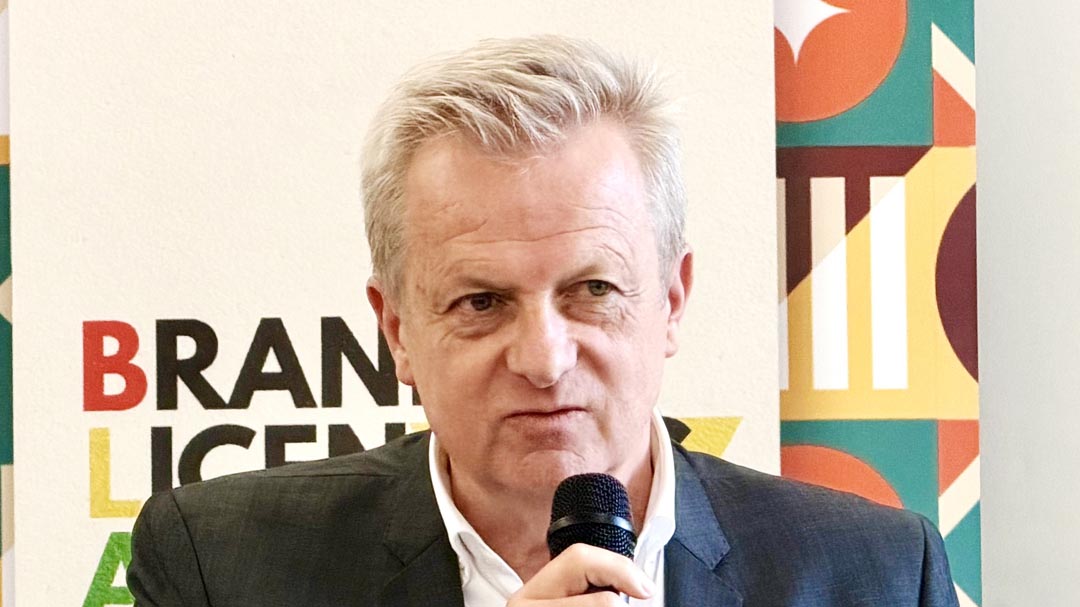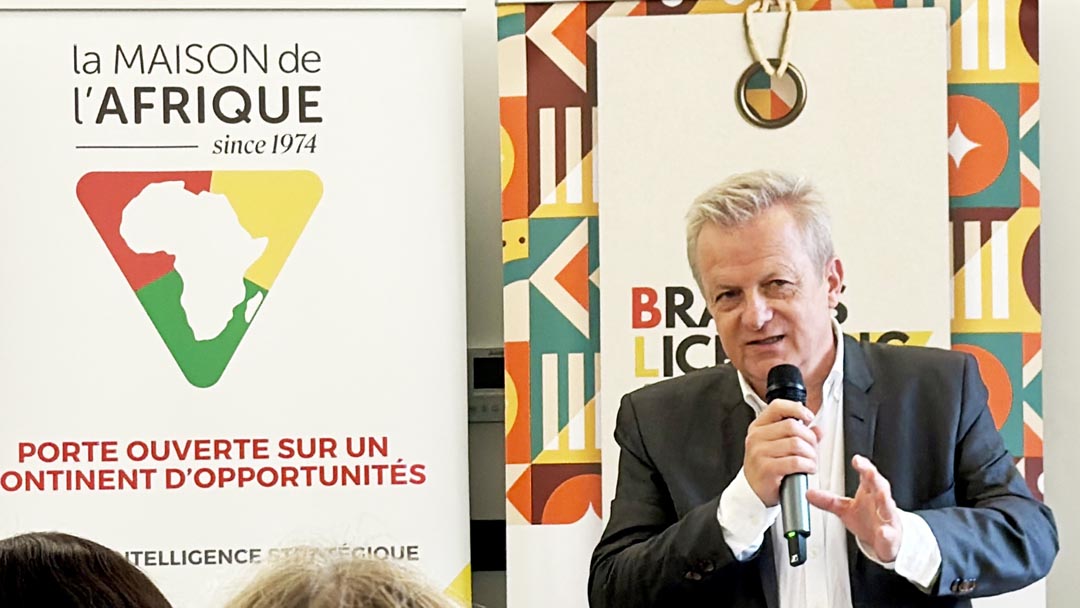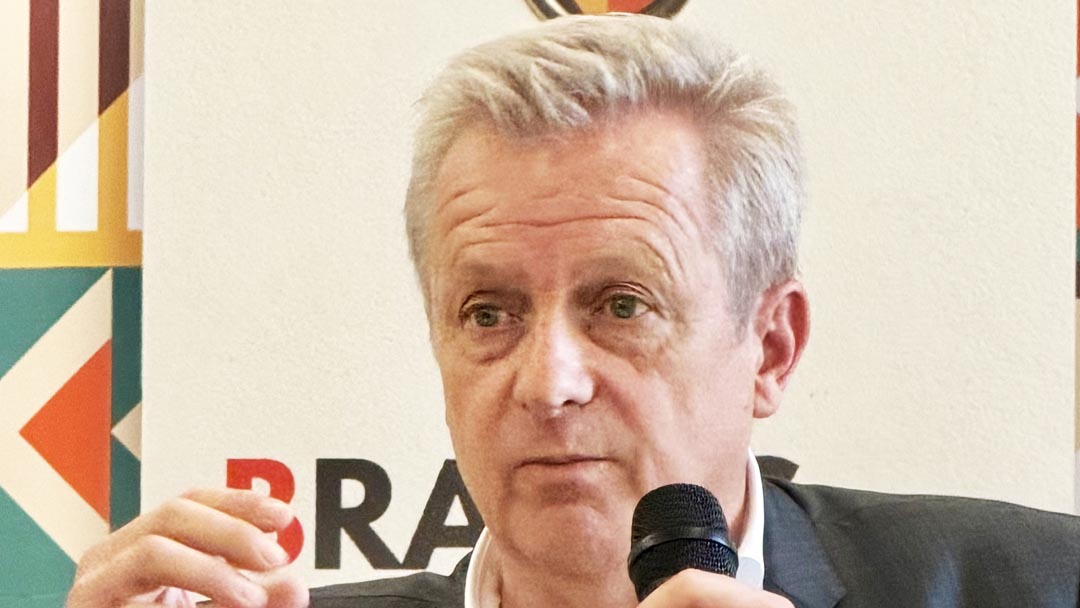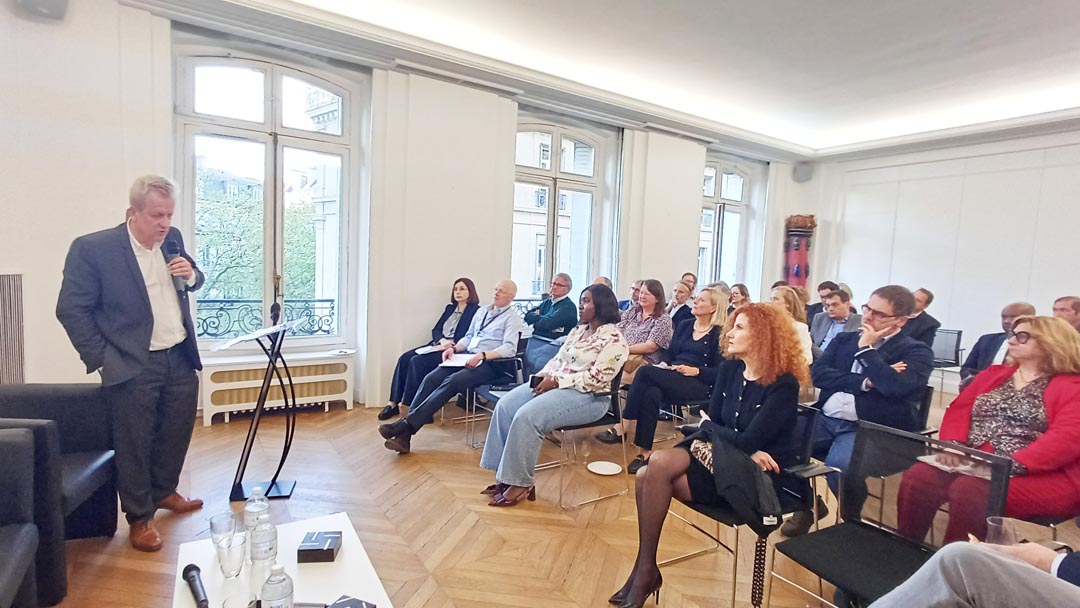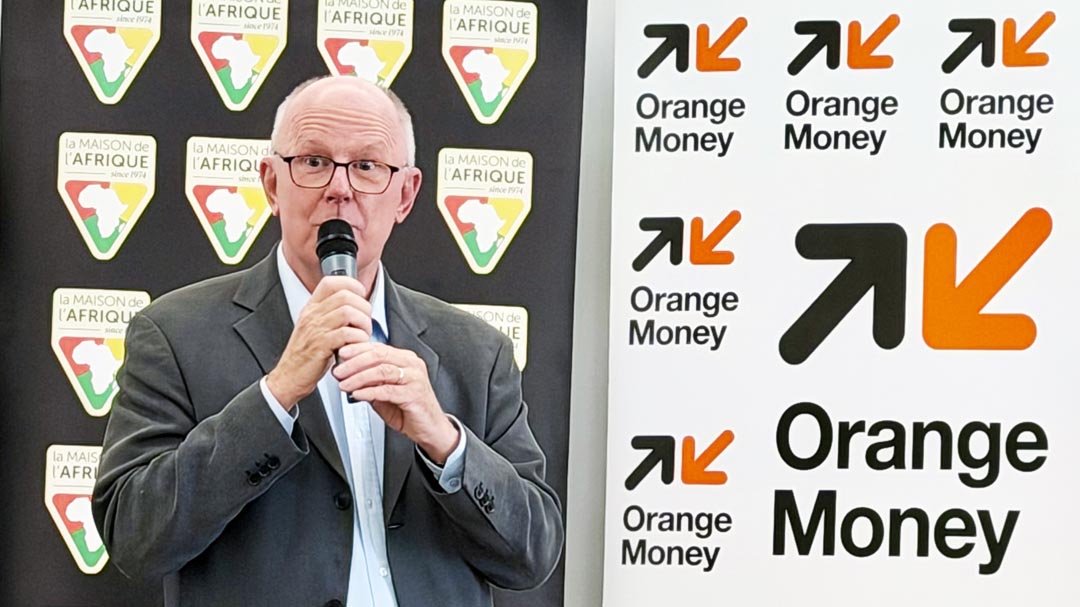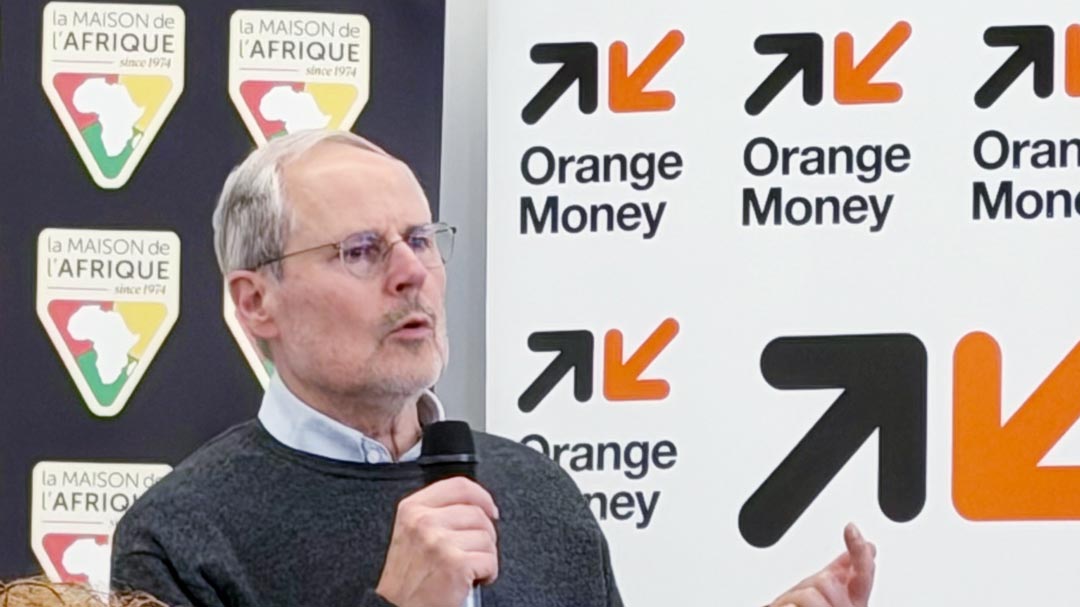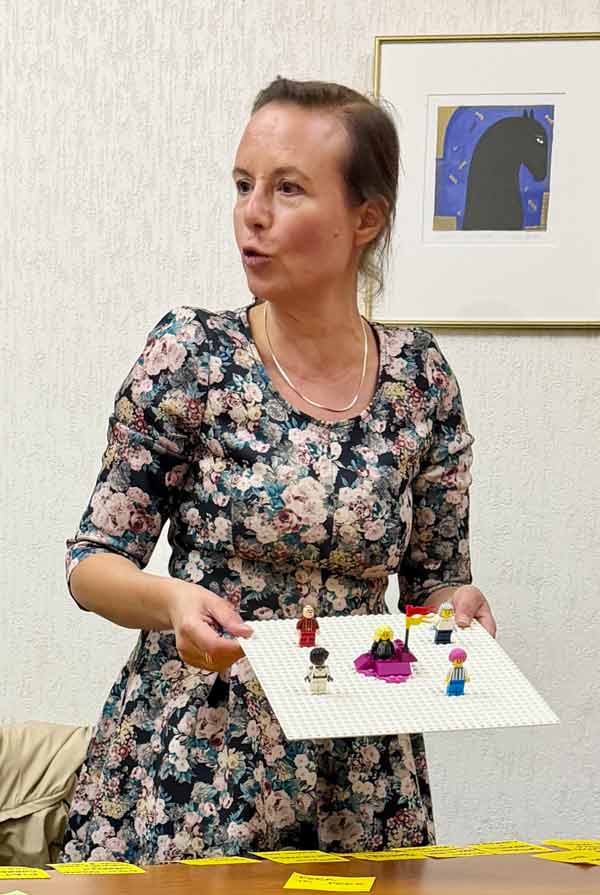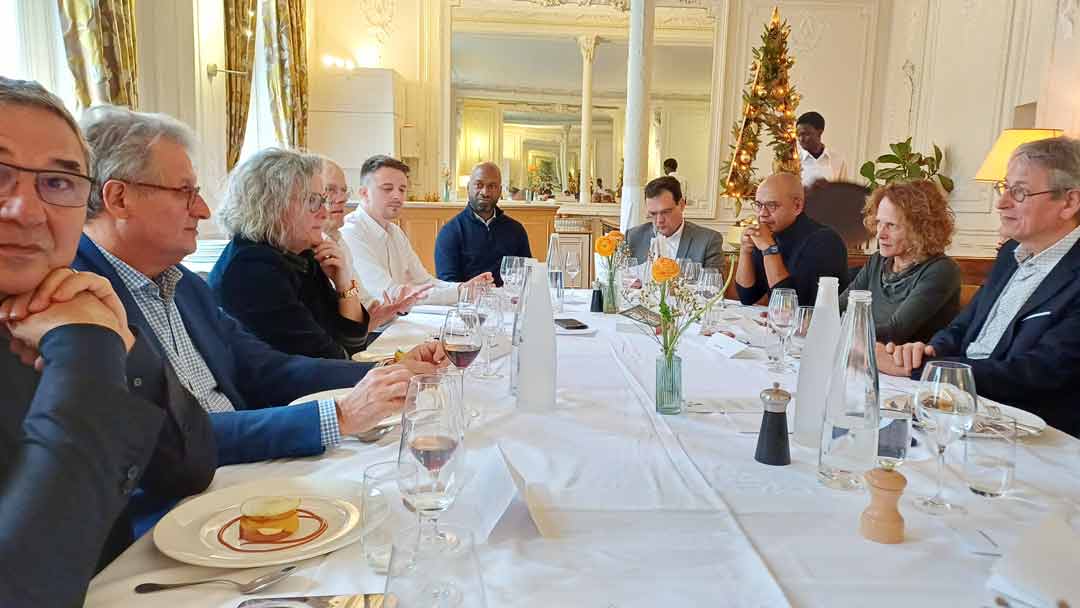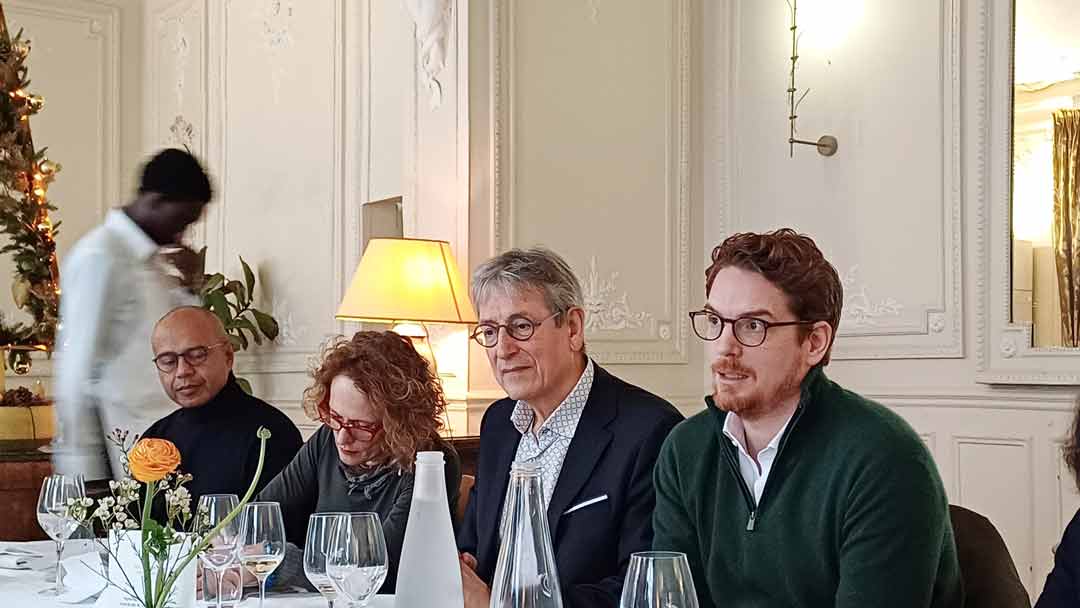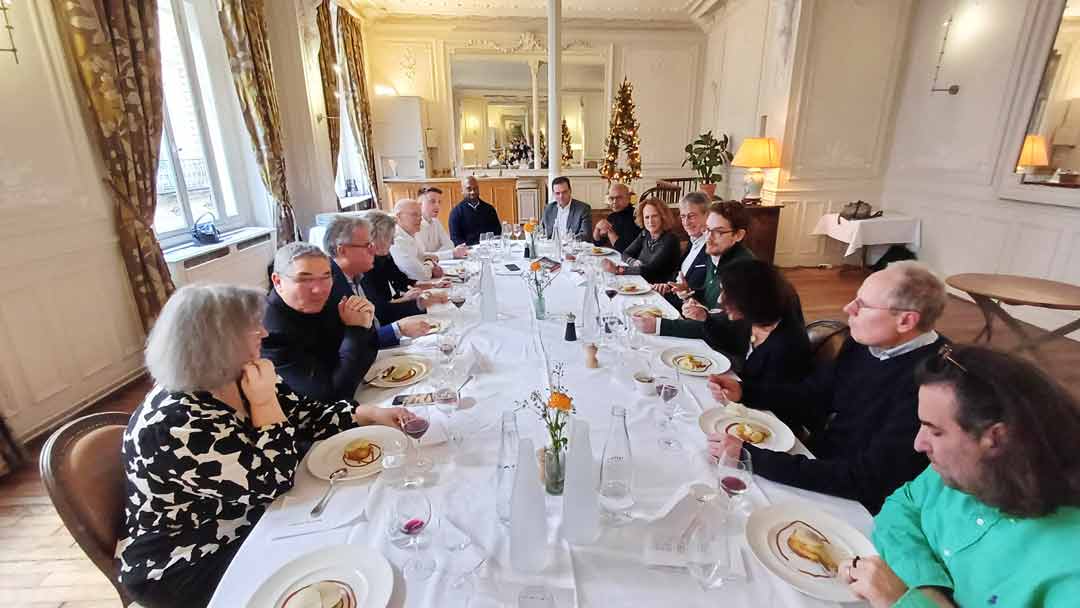
Les défis des dirigeants des entreprises face à l’IA, avec Sandra Teboul

Sandra Teboul, consultant en capital humain, discute des défis des dirigeants face à l’intelligence artificielle (IA). Elle souligne que les dirigeants doivent se réinventer, en se concentrant sur l’accompagnement et la confiance des collaborateurs. L’IA transforme les métiers, révélant la valeur ajoutée humaine. Les grandes entreprises comme Orange, Carrefour et Airbus mettent en place des structures d’accompagnement pour gérer ces changements. Sandra insiste sur l’importance de redéfinir les métiers à faible valeur ajoutée pour les adapter à l’IA. Elle conclut en affirmant que l’IA ne remplace pas les humains, mais les transforme.

[Résumé fait par IA.]

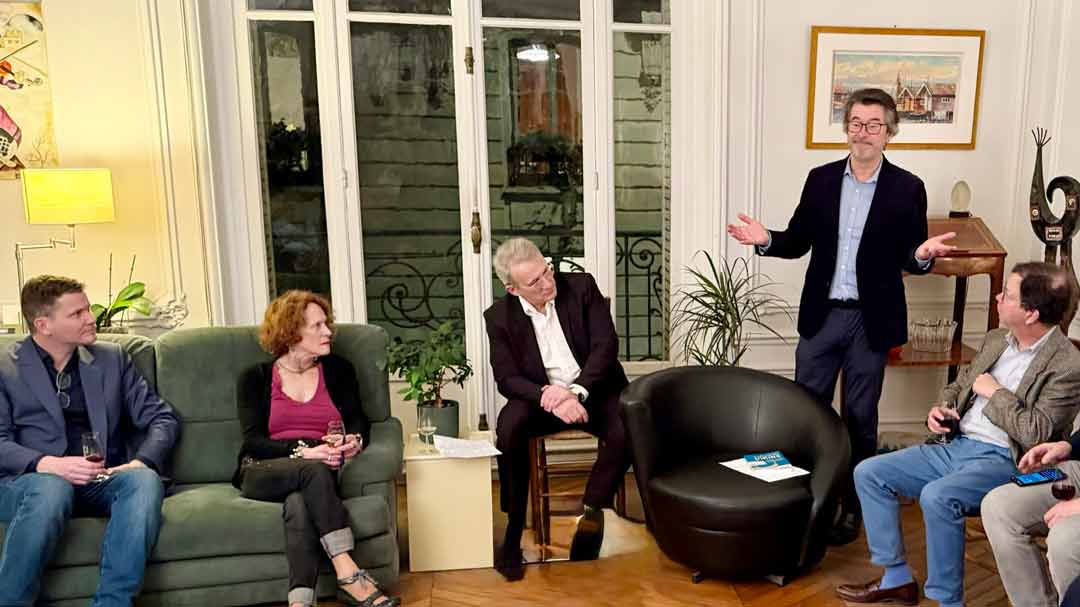
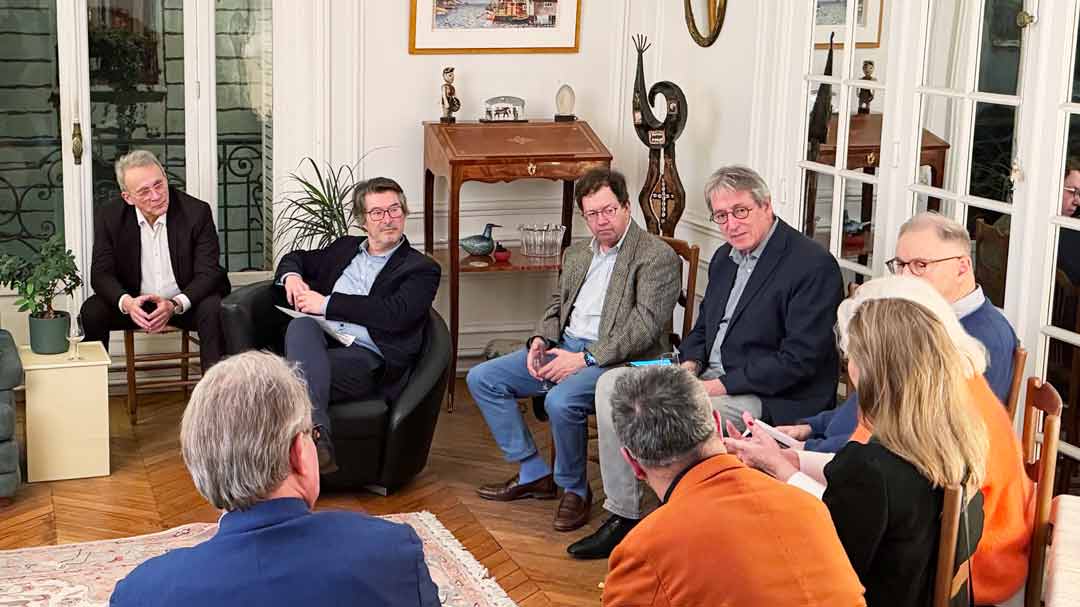
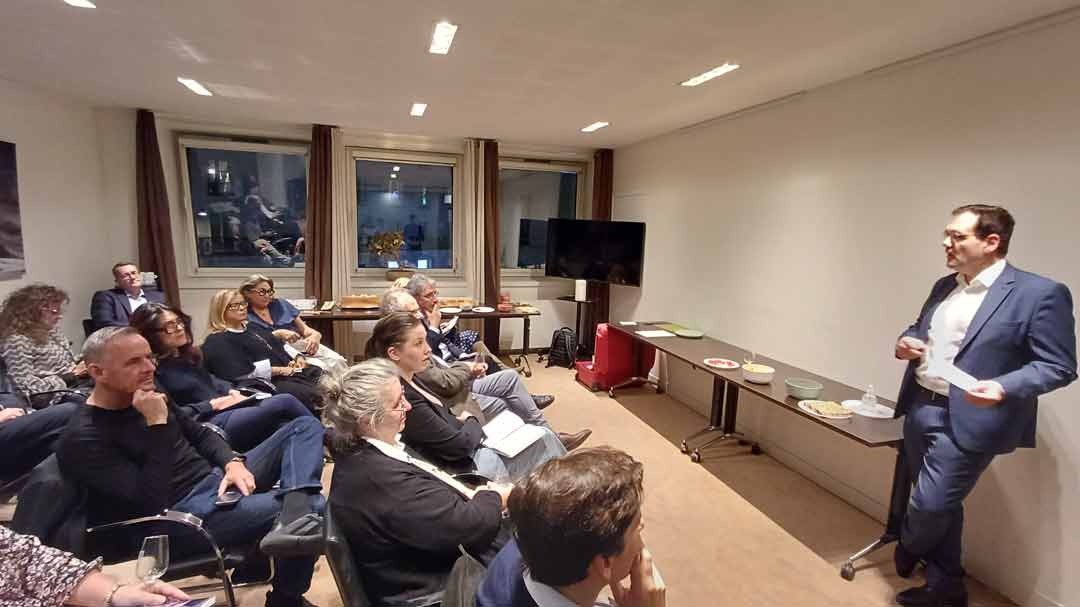
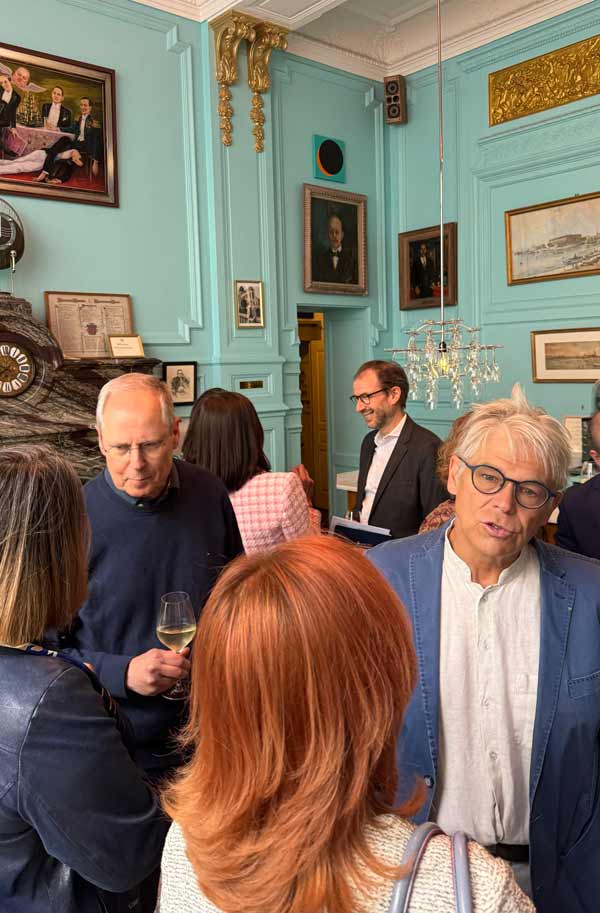
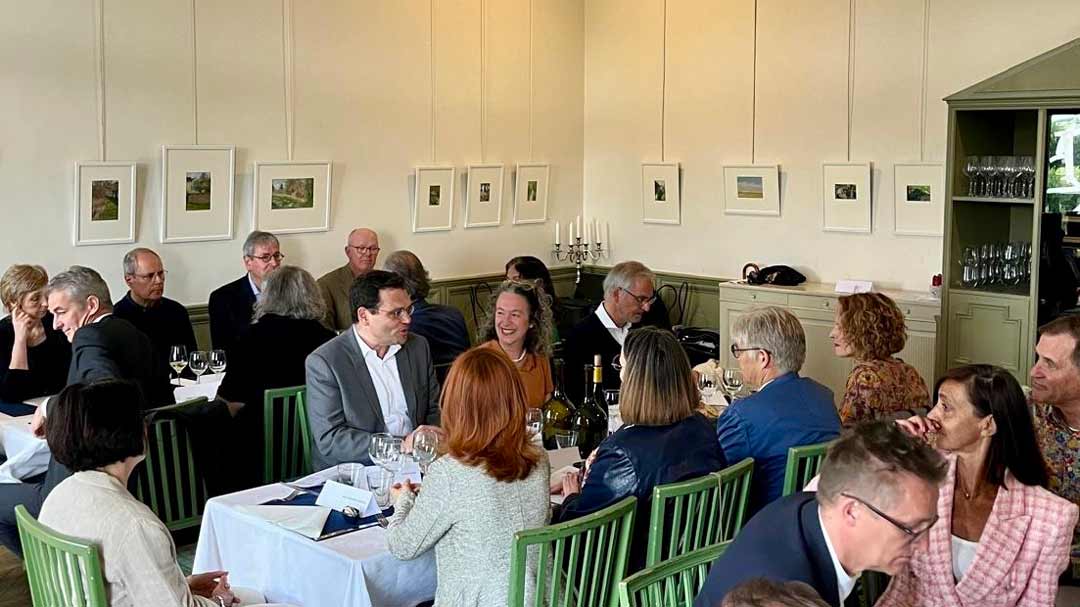
En octobre, Lunch at the Circle a organisé un événement « apéro » sur le thème de l’intelligence artificielle -— L’Avenir du travail, GenAI et Agents d’IA, de la promesse à la pratique — avec trois intervenants :

Fabrice Teboul – Auteur, « AI in Recruitment Services » & co-fondateur de 1FIT

Sandra Teboul – Fondatrice, Talisman Partners

Clément Bruneau – Équipe fondatrice de Dust (ex-Aircall, Y Combinator)

Cet article est tiré de l’interview réalisée avant l’événement avec Fabrice Teboul.

Les défis des dirigeants des entreprises face à l’IA, interview avec Sandra Teboul

Per Karlsson :

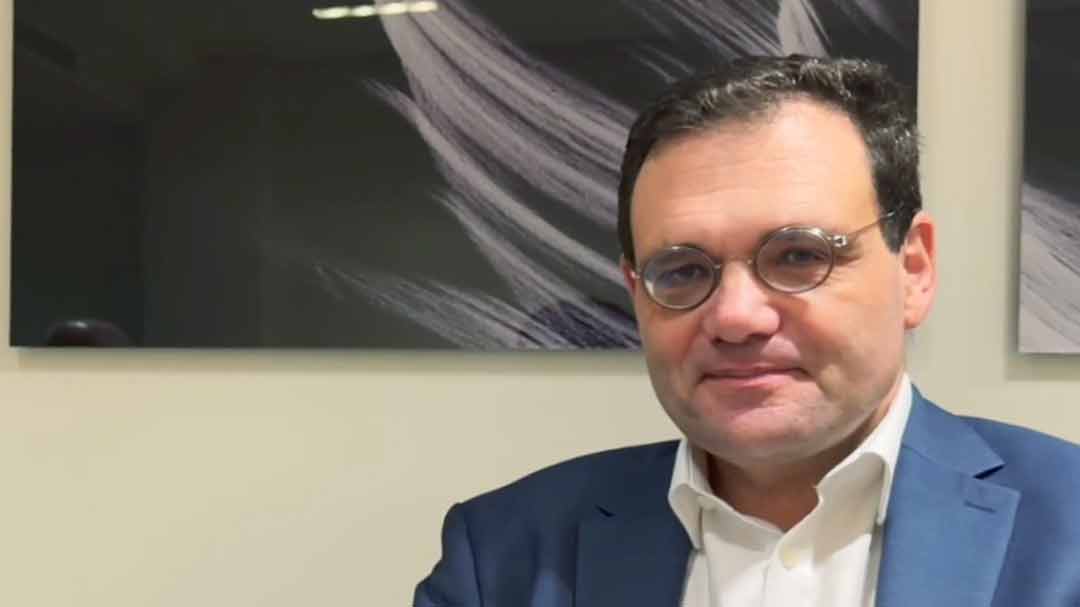
Bonjour Bienvenue au Lunch At The Circle qui est aujourd’hui en soirée. Je suis ici avec Sandra, Sandra Teboul, consultant en capital humain. Une 1ʳᵉ Question pour moi à toi qui travaille dans le milieu des grandes entreprises — aujourd’hui Dans le contexte d’intelligence artificielle, quels sont les grands soucis des dirigeants?

Sandra Teboul :

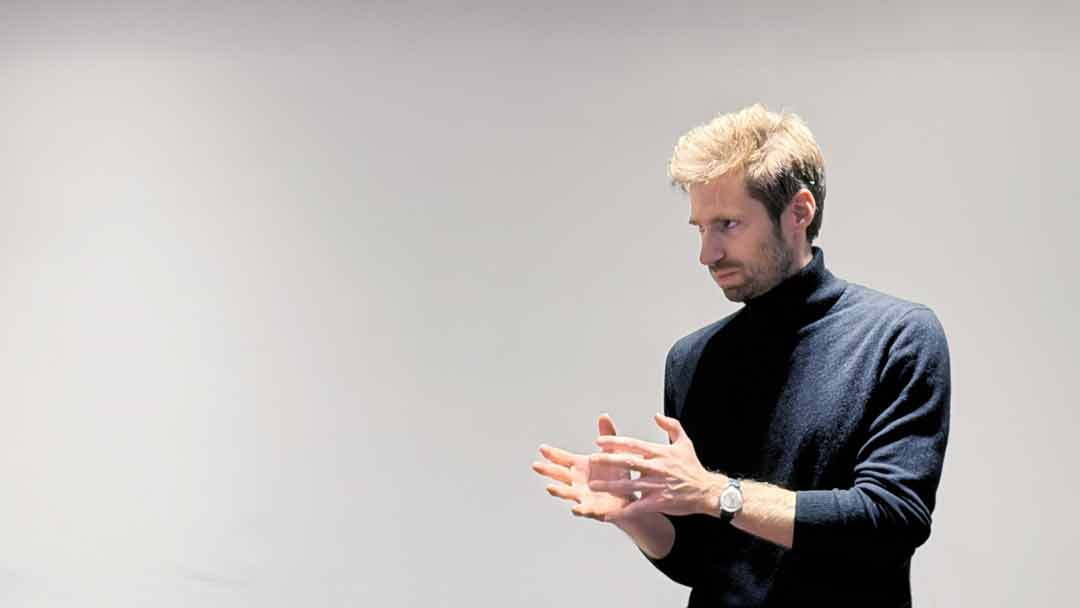
Les dirigeants sont en perte de repères Total. ils doivent se réinventer. Ils ne peuvent plus manager leurs équipes comme il est manager au siècle Dernier. Tout ce qui est maîtrise, puissance, charisme, certitude n’a Plus lieu d’être Parce qu’avec l’intelligence artificielle, l’information est partout, elle est tellement accessible que la compétence est ailleurs et elle est dans justement le fait d’accompagner Mes collaborateurs avec la capacité à leur faire confiance, à Leur donner du quatre et à Leur donner du sens et des repères.

Per Karlsson :

Aujourd’hui, on parle souvent dans l’entreprise de « la culture » d’une entreprise. Dans le contexte aujourd’hui avec l’IA, qu’est-ce qui va se passer avec la culture de l’entreprise? Comment ça va changer?

Sandra Teboul :

Ça va lisser, ça va lisser beaucoup de choses. Tous les grands groupes en sont au même Point. Tous les grands groupes sont en train de mettre en place des structures d’accompagnement pour leurs collaborateurs autour de l’IA parce qu’il Y a beaucoup de crispations autour de l’IA. La plupart des collaborateurs ont très, très Peur que ça Remplace leur métier. Donc j’en Parle dans ma présentation (plus tard dans la soirée). Il y avait la semaine dernière Un grand événement Porte de Versailles Paris qui s’appelait aldish ( ?) 2025 qui évoquait justement tous les sujets RH. Et donc l’IA y avait sa place. Et donc on parlait dans cet événement de tout ce qui était en train d’être mis en place par des grands groupes comme Orange, Carrefour, Airbus autour de l’IA. Donc il y a toujours des méthodes traditionnelles d’accompagnement puisqu’on parle d’un sujet qui concerne le capital humain. Donc tout ce qui coaching, mentoring… toutes les formes d’accompagnement. Mais il y a aussi maintenant des programmes, notamment dans les entreprises apprenantes comme Carrefour se revendiquent de l’être sur des programmes justement qui expliquent tous les fondamentaux l’IA, qui explique petit à Petit comment les prendre en main. Et ça, ça ne remplace pas les mode d’accompagnement traditionnel.

Per Karlsson :

Et donc dans ce contexte-là, quel est ton rôle?

Sandra Teboul :

Mon rôle à Moi c’est d’accompagner Justement les entreprises dans l’acculturation Et d’accompagner Les collaborateurs vers la notion de confiance. Comme je vais le dire dans ma dans ma présentation, en fait l’IA ne remplace pas les métiers, elle les transforme et elle révèle Elle nous révèle à nous-mêmes. Elle révèle Notre valeur ajoutée, notre valeur humaine. Aujourd’hui On doit travailler avec les machines. On doit apprendre à collaborer avec des machines pour bien faire notre travail. L’idée ça n’est Pas de rentrer en compétition avec l’IA, c’est Justement d’utiliser du mieux ( ?) possible aussi le temps qui nous est en partie le temps que ça Nous dégage pour faire des choses de la plus forte valeur ajoutée.

Per Karlsson :

Aujourd’hui, en général, il y a beaucoup de gens qui s’inquiètent pour l’intelligence artificielle. Je pense que nous, ici aujourd’hui qui sont tous plus ou moins dans le monde de cette nouvelle technologie, nous ne sommes pas trop inquiètes, mais il y a beaucoup de gens qui sont très inquiètes, qui pensent que c’est presque la fin du monde des fois. Qu’est Ce qu’on peut dire pour faire comprendre aux gens si c’est ton avis que ce n’est Pas dangereux. Ce n’est Pas quelque chose qui va casser le monde.

Sandra Teboul :

Ça Peut être Dangereux. ça Peut être dangereux sur les sur les gens dont les fonctions sont à faible valeur ajoutée. Donc l’idée ça Va être de redéfinir les métiers. En fait tu me demandais tout à l’heure Quel était notre travail. Notre valeur ajoutée à Nous, c’est de retransformer les métiers qui sont aujourd’hui en entreprise à faible valeur ajoutée autour de l’IA. L’IA sera toujours plus fort que nous sur toutes les dimensions techniques, toutes les tâches Qui sont à faible valeur ajoutée l’IA peut remplacer l’humain. Donc justement, notre rôle à nous, conseil RH, ça Va être d’accompagner Les organisations sur comment est-ce qu’on revalorise certaines fonctions, comment est-ce qu’on leur donne justement une dimension plus humaine.

Per Karlsson :

On en parlait encore plus tout à l’heure Dans ta présentation. Merci d’être venu à « Lunch at the Circle » qui est plutôt un dîner-apéritif At The Circle. Merci.

On Sandra Teboul:

“Sandra Teboul is an HR professional expert, she works with major French and multinational corporations as a consultant mostly in Finance, Luxury and Consulting industries, and also with prestigious French business schools.

“Certified as an executive coach from ICF, Sandra offers individual and collective programs of executive coaching for CEOs and managers who wish to improve the engagement, well-being and performance of their employees and, indeed, themselves.

“She has 20 years of experience in the corporate world. Most recently, as Founder and CEO in Human Capital Consulting firm Talisman, she leads individual and collective programs through the building of trust in complex organizations.

“She works on assignments that aim people to work together through a better level of understanding of their style, corporate culture and consciousness of their skills.

“She intervenes on human capital subjects within large firms, small and medium companies, family businesses, investment funds, consulting firms, law firms, start-ups.” (from LinkedIn)

More on Sandra Teboul here:

https://www.linkedin.com/in/sandra-teboul/

LAC on AI in the workplace with Fabrice Teboul

LAC on AI in the workplace with Fabrice Teboul

Clement Bruneau at Lunch at the Circle

Clement Bruneau at Lunch at the Circle

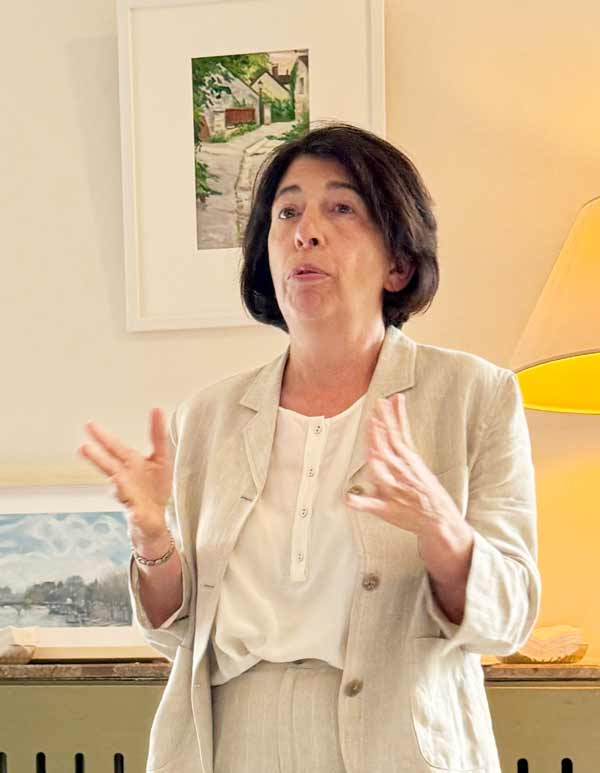
Sandra Teboul at Lunch at the Circle

Sandra Teboul at Lunch at the Circle

Fabrice Teboul at Lunch at the Circle

Fabrice Teboul at Lunch at the Circle


Le recrutement et l’IA, une discussion avec Fabrice Teboul au Lunch at the Circle

Fabrice Teboul, spécialiste en ressources humaines et recrutement, discute de l’impact de l’IA (intelligence artificielle) sur le recrutement. Il souligne que les sociétés de recrutement doivent équilibrer l’automatisation technique et la dimension humaine, surtout pour les postes managériaux. Les candidats peuvent ressentir une déshumanisation avec des processus automatisés, mais des solutions comme l’utilisation de la vidéo pour des interactions finales peuvent maintenir un élément humain. Fabrice Teboul mentionne également que son livre sur l’IA a facilité ses contacts professionnels en fournissant des informations et des perspectives inédites sur le marché du recrutement.

[Résumé fait par IA.]

En octobre, Lunch at the Circle a organisé un événement « apéro » sur le thème de l’intelligence artificielle -— L’Avenir du travail, GenAI et Agents d’IA, de la promesse à la pratique — avec trois intervenants :

Fabrice Teboul – Auteur, « AI in Recruitment Services » & co-fondateur de 1FIT

Sandra Teboul – Fondatrice, Talisman Partners

Clément Bruneau – Équipe fondatrice de Dust (ex-Aircall, Y Combinator)

Cet article est tiré de l’interview réalisée avant l’événement avec Fabrice Teboul.

Le recrutement et l’IA, l’interview avec Fabrice

Per Karlsson :

Bienvenue. Je suis ici aujourd’hui avec Fabrice Teboul. Bonsoir à toi, l’un des organisateurs de la Lunch at the Circle. Ravi d’être là encore une fois avec toi.

Fabrice Teboul :

Bonsoir Per.

PK :

Tu es l’un des organisateurs de Lunch at the Circle et ravi de t’avoir comme intervenant pour une fois. Tu travailles dans le monde du conseil des ressources humaines du recrutement.

FT :

J’ai fait toute ma carrière dans le recrutement et depuis un an, on a décidé de s’orienter plus sur l’IA Pour les ressources humaines

PK :

Aujourd’hui, vois-tu l’IA comme un grand défi pour les sociétés qui travaillent dans le recrutement ou plus pour les sociétés pour qui vous travaillez comme consultant.

FT :

En fait, c’est un grand défi pour les sociétés de recrutement comme tu l’as dit, parce qu’elles ont eu l’habitude De faire beaucoup de choses d’une manière Peut être Un petit peu artisanale en ayant l’informatique plutôt Comme une fonction back-office. Alors qu’aujourd’hui, l’IA et les outils technologiques deviennent de plus en plus centraux, notamment dans les grandes entreprises qui ont longtemps été leurs clients, qui utilisent à 85 les outils d’IA. Donc aujourd’hui, la question pour beaucoup de cabinets de recrutement aujourd’hui, c’est comment garder cette dimension humaine, ce côté artisanal qui fait toute leur valeur ajoutée et leur force, tout en commençant aussi à Prendre en compte la nouvelle dimension technologique.

PK :

Une des questions que je me pose, c’est que recrutement c’est souvent une question de personnage, une question très personnelle et c’est une chose qui ne peut être pas être très intelligence artificielle. Est-ce qu’on risque de perdre ce côté personnage-personnel dans le recrutement avec l’IA

FT :

En fait, il y a un certain nombre de recrutements qui sont peut-être à un niveau très technique ou par exemple il faut des certificats pour des compétences où finalement la disponibilité, le fait d’avoir certaines compétences techniques très rapidement peut prédominer et là l’automatisation maximum peut avoir vraiment beaucoup de sens. En revanche, quand on parle de fonction managériale, de fonction de leadership, la dimension humaine que tu évoques est clé. Et toute la question ça Va être De dire où est ce qu’on Peut faire intervenir l’IA Sans perdre la dimension humaine et au final de garder cette dimension humaine qui fait vraiment la qualité de ces recruteurs-là qui apporte beaucoup de valeur ajoutée à des boards à des conseil d’administration en prenant en compte notamment la dimension culturelle de l’entreprise.

PK :

Donc si on le voit d’un autre côté le côté des candidats, quels sont les changements pour les candidats? Quelles sont les compétences sur lesquelles il faut mettre un effort?

FT :

C’est Vraiment une très Bonne question aujourd’hui Parce qu’en fait, aujourd’hui, on est un petit peu dans le monde fait où les CV sont faits par des IA de candidats élus par des IA d’entreprise. Donc c’est Un peu les robots qui parlent au robot et la question se pose aujourd’hui De dire quelle est la dimension humaine qui reste. Il y a 80 5 des candidats je crois qu’ils se plaignent de ne pas recevoir de réponse d’un Humain. C’est à dire qu’aujourd’hui Quand tu envoies une candidature, tu reçois Pendant longtemps Pas de réponse. Aujourd’hui tu reçois Une réponse, donc c’est une amélioration, mais elle est automatisée. Donc on perd cette dimension humaine. Donc ça c’est un grand changement pour le candidat et il y a un risque de déshumanisation qui commence vraiment à Sortir. On est plein dedans. C’est relativement nouveau. C’est l’effet humaine qui date de peut-être Six mois, un an, deux ans pour certaines entreprises. Donc il y a un risque de déshumanisation. Mais cerise, si on le retourne, il est peut être aussi une opportunité de se dire je réinjecte de l’humain Dans mon processus de recrutement. Par exemple, il y a des entreprises qui utilisent la vidéo pour partie du processus mais qui gardent l’humain comme étant vraiment le décisionnaire final qui donne du feedback. Donc c’est Vraiment un équilibre à Trouver, je pense, entre la partie techno technologique et la partie humaine.

PK :

Tu as fait un livre récemment  sur le recrutement et l’IA. Quel est le  sens de ce livre et comment est-ce que ça a impacté ton travail à Toi.

FT :

Ça a beaucoup impacté. En fait, pour être très Clair. Avant de faire le livre, on était des intervenants parmi l’autre. à partir du moment où On a fait l’effort De faire une étude où On a parlé à Beaucoup d’entreprises Et on a fait beaucoup d’études Pour aller voir ce qui se passait dans le marché, on a accumulé des informations qui n’étaient pas encore vraiment disponibles. Donc là, tous les signaux, board members étaient intéressés de nous parler pour comprendre ce que faisaient leurs concurrents, leurs clients et d’un seul coup, ça nous a ouvert beaucoup de portes. Donc je dirais que le livre, au-delà du contenu qu’il a nous permet aujourd’hui de rencontrer des gens qu’on n’aurait Pas forcément rencontré sans le livre. Donc c’est Vraiment un accélérateur en termes de prise de contact, en termes de relationnel, ça a été vraiment un gros accélérateur à topo Merci

PK :

Fabrice, merci beaucoup et encore plus pour cette soirée Lunch at the Circle.

Fabrice Teboul’s book :

AI in Recruitment Services: A Strategic Playbook for European Recruitment Leaders

Available on Amazon:

https://www.amazon.fr/-/en/AI-Recruitment-Services-Strategic-Playbook/dp/B0F9TBHT27/

On Fabrice Teboul:

“Marketing leader with a global track record in technology, recruitment, and HR. I help organizations integrate AI into strategy, marketing, and client delivery for measurable impact and lasting growth. Co-author of ‘AI in Recruitment Services: A Strategic Playbook for European Recruitment Leaders.’ Connect to explore AI-driven solutions!” (From LinkedIn)

More on Fabrice Teboul here:

https://www.linkedin.com/in/fabriceteboul/

LAC on AI in the workplace with Fabrice Teboul

LAC on AI in the workplace with Fabrice Teboul

Clement Bruneau at Lunch at the Circle

Clement Bruneau at Lunch at the Circle

Sandra Teboul at Lunch at the Circle

Sandra Teboul at Lunch at the Circle

Fabrice Teboul at Lunch at the Circle

Fabrice Teboul at Lunch at the Circle


Laure Merlin on blockchain at Lunch at the Circle

In September, Lunch at the Circle welcomed Laure Merlin at our after-work event dedicated to explaining blockchain with Lego bricks.

Laure Merlin is a consultant, facilitator, and founder of Play My Tech. More on Laure Merlin on LinkedIn here. Laure is known for making complex topics accessible, leading workshops and conferences for senior executives, bankers, lawyers, and even military officers. With her unique approach of explaining blockchain through Lego bricks, she brings clarity, energy, and interaction to every group she works with.

In connection with the Lunch at the Circle event, Stefan Norberg, one of the Lunch at the Circle organisers, interviewed Laure on her Lego method and on blockchain in general.

Laure Merlin on blockchain, guest speaker at Lunch at the Circle

Laure Merlin on blockchain, guest speaker at Lunch at the Circle

First, a summary of the interview, followed by the interview as a whole:

Laure Merlin interview summary

Laure Merlin, blockchain consultant, discusses using Lego bricks to explain blockchain concepts, inspired by the Montessori method. She highlights Bitcoin as a key public blockchain, with Ethereum and Solana also notable. Future applications include government transparency, where blockchain’s immutability could facilitate the tracking of public spending. Merlin noted banks’ initial resistance but eventual embrace of blockchain. She emphasised blockchain’s role in AI traceability and federated learning, using examples like rewarding data providers. Laure plans to open-source her Lego-based educational method and is involved in Liberland, a blockchain-focused nation. She encourages attention to the potential of Bitcoin and blockchain in various industries.

She also invites anyone interested in helping to make her “Lego method” of explaining blockchain more widely available to get in touch.

LAC Interview with Laure Merlin

Interview by Stefan Norberg

SUMMARY KEYWORDS

Blockchain, financial systems, Bitcoin, Solana, transparency, decentralised, algorithms, data training, anonymous data, private blockchain, adoption, security, anonymity, political purposes, open-source methods.

(NB: this is a slight adaptation of the interview and not an exact verbatim transcription.)

Stefan:

Laure Merlin, you came to Lunch at the Circle to talk about blockchain and to help participants understand its concept with your own developed demonstrator, using Lego. Where did you get the idea of using Lego.

Laure:

Where did I get the idea to present it, to use Lego bricks to explain how the technology works? It’s exactly the same answer, because my kids were never forced to go to school, and always had the freedom to choose whether they would go to school or not. I had read about everything I could find from Maria Montessori and the Montessori method.

Explaining blockchain with Lego with Laure Merlin

Explaining blockchain with Lego with Laure Merlin, copyright F Teboul

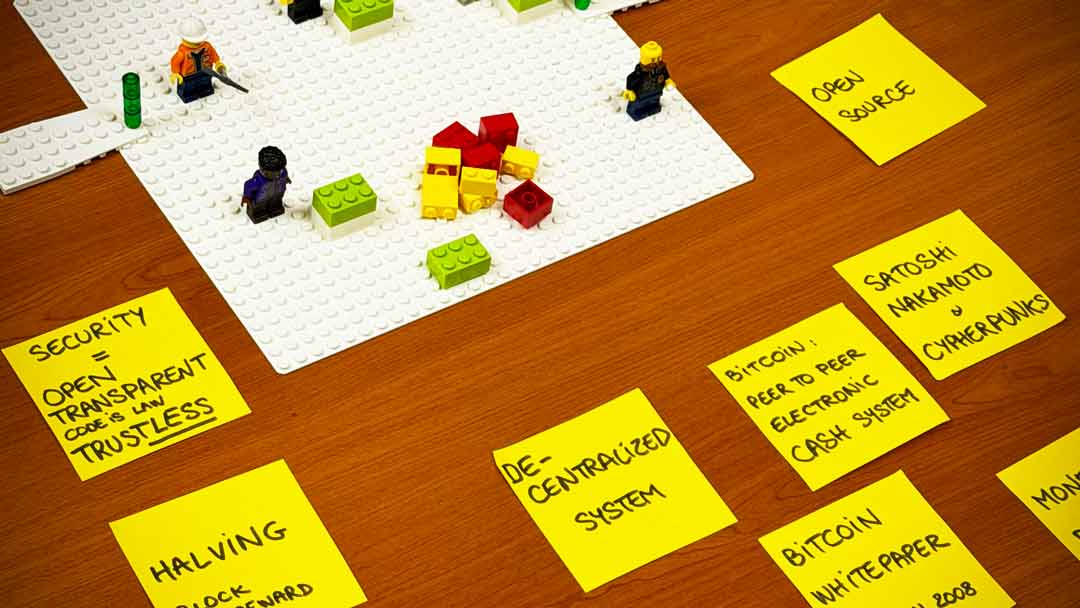
One of its core tenets is that you can make very abstract and complicated concepts clear to kids by using physical objects. And that’s what I did. So when I discovered that the more you explain how the technology works, the less people understand, I was like, “Guys, we have to do something different”. And so, together with one blockchain architect and a few blockchain developers, I started the prototype of this workshop using Lego bricks to make these complicated, abstract concepts very clear with physical objects.

So, where is blockchain used? Where do we find them?

Currently, the strongest alternative financial system existing on the planet is Bitcoin. This is one public blockchain, but there is significant activity from banks and traditional financial markets on other blockchains, such as Ethereum or newer blockchains like Solana.

What are the important future, direct and indirect usage? Have you seen any applications of blockchain that you think will emerge in the future, but which we currently consider unusable?

Government transparency, definitely. Everything — spending, especially spending. If every citizen can track every euro that the government or other administrations, administrations in general, are collecting from them and spending in their name. I think that would be super cool.

But it’s still possible today, because I’m just back from (Lebanon?).

In Sweden, also. You can go and see how much everyone spends and what they spent yesterday, but not with Blockchain. They use other systems.

The point of using Blockchain is that you cannot fake it, you cannot erase it.

Is there someone who is blocking the potential usage?

Who said, “Never attribute to malice, which can be adequately explained by stupidity?” I think, yeah, of course, it’s so obvious that banks have a very strong interest in slowing down the development, but they did not succeed, so now they are embracing it.

Laure Merlin explaining blockchain with Lego

Laure Merlin explaining blockchain with Lego, copyright F Teboul

How do you envision the evolution of blockchain going forward? Is it related to potential future applications? Or is there an evolution of blockchain that can move into something else, where the basic technology and concept are used?

Yeah, it’s AI money. Obviously independent. AI can use independent, traceable financial systems. Also, in federated learning, when you train an algorithm. Maybe I’m wrong on this, this is totally outside of my expertise, but some companies that were training algorithms on medical data, they were also using a blockchain to track where the information came from, which benefited the algorithm to reward the hospital that had provided the data according to the weights that were improving the algorithm — traceability. So basically, traceability. It was not only a distributed database to mark what, exactly what actions are taken by the AI, and where does the algorithm change most. So what were the data sets that provided the most value for the whole; you know, training.

Blockchain can be used for this scenario. I’m not an expert, but I know that I’ve been involved in a project where the idea was to create a database where you can use even anonymous data, and then create a database that is linked to a kind of secure network that anyone can’t access because it’s distributed.

Basically, a blockchain is a very expensive database if you don’t decentralise it. It’s just very complicated for nothing. That’s why private blockchains don’t make any sense. But it’s an unbreakable and unfakeable database if it is actually decentralized. And you do not know where the nodes are, because then there is no way for someone to tamper with this database.

Should we give more attention to blockchain?

As a private individual or a company with some available funds, you should definitely give more attention to Bitcoin. Otherwise, it really depends on your industry, because maybe you’re going to be using a lot of blockchains in five years, but you would not even know that there is a blockchain inside, you know, like “Intel Inside”, or something.

We are moving to a rhythm of adoption and UX UI, which are going to be digestible. So you don’t actually know that there is a blockchain providing data or providing security or providing transparency or providing anonymity for the use case you are having. However, the worldwide financial system is definitely in trouble. So it’s not a stupid idea to just really look and understand Bitcoin.

For things like the AI. AI is a big subject… We need to follow the things that may touch us. So, what are your plans linked to the blockchain, or perhaps something similar?

Well, obviously I’m involved a little, or maybe it will be a lot, in Liberland. Which is branding itself as the first blockchain nation. So, that’s one plan: joining a kind of collective that uses blockchain for political purposes.

I also want to open-source my method, the method I created using Lego bricks. I really, really, really want this method to be available to everyone so they can truly understand what it’s all about.

This is a message to anyone watching or listening…!

Yeah, anyone who knows how to craft good videos and has patience with me because of the ADHD thing, so I have five ideas every minute. So, it’s not going to be very streamlined. But we can get somewhere where what we produce is very helpful for the world.

L’IA peut-elle imiter une personne réelle ? Entretien avec Maxime Girardeau et sa co-autrice Loïe

Nous avons récemment eu comme invité au déjeuner réseautage Lunch at the Circle Maxime Girardeau, pour discuter encore une fois du sujet de l’intelligence artificielle.

L’intelligence artificielle, peut-elle réellement remplacer un humain ?

Certaines questions s’imposent face à l’essor de l’IA : Est-elle une promesse de progrès ou une menace ? Peut-elle imiter, voire remplacer l’humain ? Quels en seront les impacts sur notre société, nos compétences et notre éthique ?

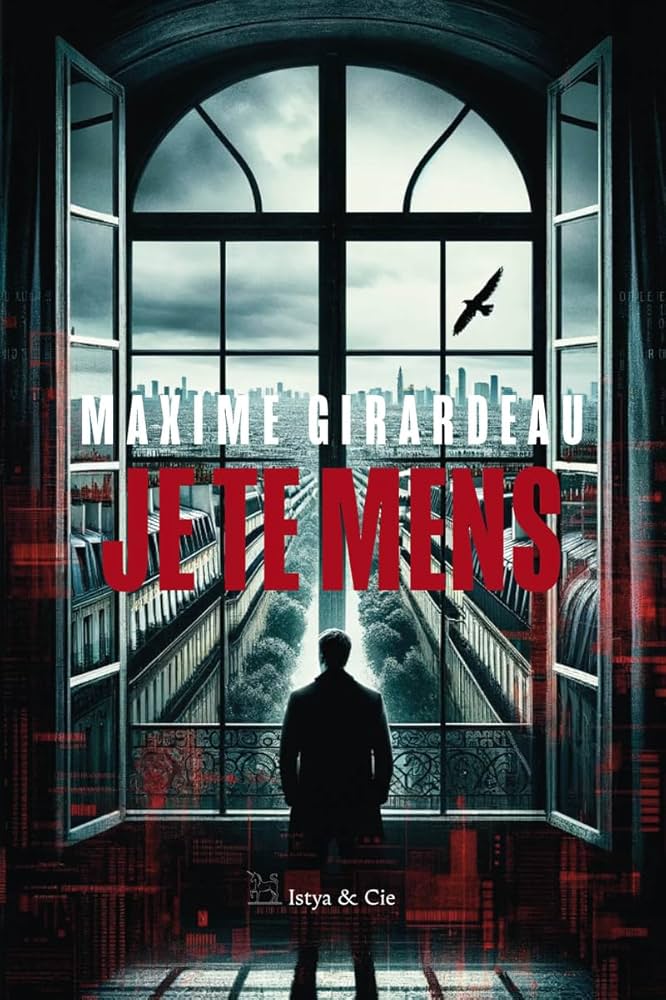
Dans son dernier roman, Je te mens, Maxime Girardeau, auteur et VP Cloud Centre of Excellence chez Capgemini, a exploré ces questions en coécrivant son œuvre avec ChatGPT, transformant une IA en personnage – et auteur ! C’est une expérimentation audacieuse sur le pouvoir de l’IA à simuler l’humain.

  • Des réflexions captivantes : Maxime dévoilera les dessous de ce projet unique, qui questionne les limites entre l’innovation créative et technologique.
  • Les enjeux de demain : Quel rôle pour l’IA dans nos vies et dans l’entreprise ? Comment transformer nos compétences pour répondre aux défis de demain ?
  • Préparez-vous à être surpris : À travers ce roman atypique, nous débattrons de l’impact de l’IA sur nos pratiques, la dépersonnalisation potentielle des organisations, et l’importance d’une éthique de l’IA.

Cette entrevue a été réalisée à l’occasion du déjeuner Lunch At The Circle avec Maxime Girardeau.

A la fin du déjeuner-débat qui a suivi l’interview ci-dessus, Maxime a invité Loïe à se joindre à l’assemblée afin que nous puissions lui poser toutes les questions que nous souhaitions. Voici quelques questions-réponses issues de cette démonstration tout à fait étonnante.

Et aussi, quelques photos de ce déjeuner :

Maxim Girardeau speaking at Lunch at the Circle on anthropomorphic artificial intelligence

Maxim Girardeau speaking at Lunch at the Circle on anthropomorphic artificial intelligence

The circular dessert at the Lunch at the Circle lunch discussion

The circular dessert at the Lunch at the Circle lunch discussion

Maxim Girardeau speaking at Lunch at the Circle on anthropomorphic artificial intelligence

Maxim Girardeau speaking at Lunch at the Circle on anthropomorphic artificial intelligence

Maxim Girardeau speaking at Lunch at the Circle on anthropomorphic artificial intelligence

Maxim Girardeau speaking at Lunch at the Circle on anthropomorphic artificial intelligence

Maxim Girardeau speaking at Lunch at the Circle on anthropomorphic artificial intelligence

Maxim Girardeau speaking at Lunch at the Circle on anthropomorphic artificial intelligence

"Je te mens" by Maxime Girardeau, book cover

“Je te mens” by Maxime Girardeau, book cover

Interview: Thor Whalen, Integrating AI in our daily business – a threat or a panacea

On October 14 we had Thor Whalen as a guest and speaker at Lunch at the Circle. Here’s the interview with Thor:

Here’s the brief from the invitation to the event:

Integrating AI in our daily business – a threat or a panacea, with Thor Whalen

Thor Whalen co-founded and was the CTO of the originally French AI innovation company OtoSense, which was based in Silicon Valley and was then acquired by Analog Devices (https://otosense.analog.com).

Thor will share his experience with OtoSense and his journey of implementing AI into business operations.

Thor will be able to share his hands-on view and vision for the future of the LLM invasion and give us some pros and cons concerning its use in our daily businesses.

We’ll discuss how difficult it was and still is to integrate AI effectively into business operations and propose some of the main reasons why this is the case.

Next, we’ll explore how generative AI has expanded possibilities, making language-based tasks—content generation, data extraction, and research—more accessible than ever. This opens up new opportunities for workflow automation, insights from unstructured data, and collaboration tools, but it also introduces risks like privacy concerns, bias, and overreliance on AI.

Thor will provide practical advice on what to do—and what to avoid—when integrating these technologies into your business, along with strategic considerations like balancing automation with human oversight and investing in AI literacy. He will also share some predictions on where this space is heading and how you can position yourself to take advantage of these evolving tools.

Key areas of focus may include (depending on the exchanges):

  • Opportunities: Data-driven insights, task automation, augmenting human expertise, new product offerings, and multilingual support.
  • Risks: Privacy, bias, overconfidence, and the challenge of maintaining collaboration quality.

Finally, we’ll discuss strategic approaches to AI integration, including exploring open-source alternatives and ensuring human oversight in AI workflows.

Can AI replace/mimic a real person? A true and real example – with Maxime Girardeau

We continue our Lunch at the Circle theme of artificial intelligence with a very different angle on the subject on December 2:

Is AI a threat or a promise?

Can AI replace/mimic a real person? A true and real example – with Maxime Girardeau.

Next L@C on December 2.

Some people worry that artificial intelligence will replace people and make us superfluous. Mass unemployment, if not the end of the world. Other people think that AI has the potential to find a cure for cancer and perhaps avoid a new nuclear war.

What will it be? Can artificial intelligence replace people? Can it mimic personalities?

As it develops, what will the consequences be for people, society and business?

Maxime Girardeau is a French author and consultant who explores these issues in an incredibly real way in his latest novel “Je te mens”. One of the personalities in the book is generated by ChatGPT, not a fictional ChatGPT but a very real one. In other words, the book is written by two “authors”, Maxime Girardeau and ChatGPT. One of the book’s main characters, “Loïe”, is, literally, the output from ChatGPT.

Who is really the author of the book?

Is the story credible?

Maxime will share with us how this happened, how it worked, and his views on what implications this may have for real life and for business.

The presentation will be in French. A French language invitation will follow soon.

Maxime Girardeau:

This L@C event will be an exploration of how generative AI (genAI) became a character in his recent book and how important education and training will be for the future AI transformation.

Maxime will give a short presentation of his book, “Je te mens” to explain the exploratory nature of this project, which is on the borderline between creative and technological exploration.

He will share his conviction about how important the anthropomorphic aspect of genAI is and how it will profoundly shake up organisations, change our ways of working and require new skill sets.

Maxime will also share what he believes to be the core of AI transformation for companies over the next 10 to 15 years. Just as digital technology has profoundly transformed companies, AI will force them to design, develop and protect their “global corpus”. This means, not just their data, but also their processes, know-how, organisation etc.

To conclude, we will discuss the importance of education, training and the ethics underlying this whole transformation. However powerful it may be, genAI and tomorrow’s multimodal AI will also be a potentially dangerous depersonalisation tool for human organisations.

Are you worried about the potentially devastating consequences of AI? Or do you see it as a great tool for making societal, scientific and economic progress? In either case, this is an event for you.

Facts:

  • Date: Monday December 2
  • Time: 12.00-14.00 (welcome from 12:00, seated by 12:30, close at 14.00)
  • Place: contact us for information
  • Speaker: Maxime Girardeau
  • Cost: 63 €: aperitif, main course, dessert, wines, water, coffee

Book now on this link

  • contact us for information
"Je te mens" by Maxime Girardeau, book cover

“Je te mens” by Maxime Girardeau, book cover

Integrating AI in our daily business – a threat or a panacea

Lunch at the Circle event on October 14, 2024

Integrating AI in our daily business – a threat or a panacea, with Thor Whalen

Thor Whalen co-founded and was the CTO of the originally French AI innovation company OtoSense, which was based in Silicon Valley and was then acquired by Analog Devices (https://otosense.analog.com).

Thor will share his experience with OtoSense and his journey of implementing AI into business operations.

Thor will be able to share his hands-on view and vision for the future of the LLM invasion and give us some pros and cons concerning its use in our daily businesses.

We’ll discuss how difficult it was and still is to integrate AI effectively into business operations and propose some of the main reasons why this is the case.

Next, we’ll explore how generative AI has expanded possibilities, making language-based tasks—content generation, data extraction, and research—more accessible than ever. This opens up new opportunities for workflow automation, insights from unstructured data, and collaboration tools, but it also introduces risks like privacy concerns, bias, and overreliance on AI.

Thor will provide practical advice on what to do—and what to avoid—when integrating these technologies into your business, along with strategic considerations like balancing automation with human oversight and investing in AI literacy. He will also share some predictions on where this space is heading and how you can position yourself to take advantage of these evolving tools.

Key areas of focus may include (depending on the exchanges):

  • Opportunities: Data-driven insights, task automation, augmenting human expertise, new product offerings, and multilingual support.
  • Risks: Privacy, bias, overconfidence, and the challenge of maintaining collaboration quality.

Finally, we’ll discuss strategic approaches to AI integration, including exploring open-source alternatives and ensuring human oversight in AI workflows.

Thor Whalen bio

Thor Whalen is an American-born data scientist who spent most of his formative years studying in France (and Italy and Germany). He earned a PhD in mathematics (specialising in graph theory) and a Masters in computer science from Emory University, USA. His career spans diverse sectors, focusing primarily on data science consulting in business process analysis and automation, online marketing, behavioural modelling, natural language processing, and sound recognition.

Thor co-founded OtoSense, a Silicon Valley-based AI company specialising in sound and vibration analytics for predictive maintenance, security, and healthcare. As the CTO, he led the development of innovative AI-driven software solutions until Analog Devices acquired the company. Following the acquisition, he transitioned to Director of AI and Machine Learning at Analog Devices, where he refined his software architecture and design expertise.

In 2022, Thor moved back to France, where he continues contributing to the open-source community, developing tools to improve development velocity and enhance human-machine communication. He is also an active consultant, helping businesses craft AI strategies and software solutions while conducting workshops on cutting-edge technologies. His career reflects a blend of deep technical knowledge and a commitment to making technology more accessible and effective for various industries.

Contact us if you would like to participate in this L@C lunch event in Paris on October 14, 2024.

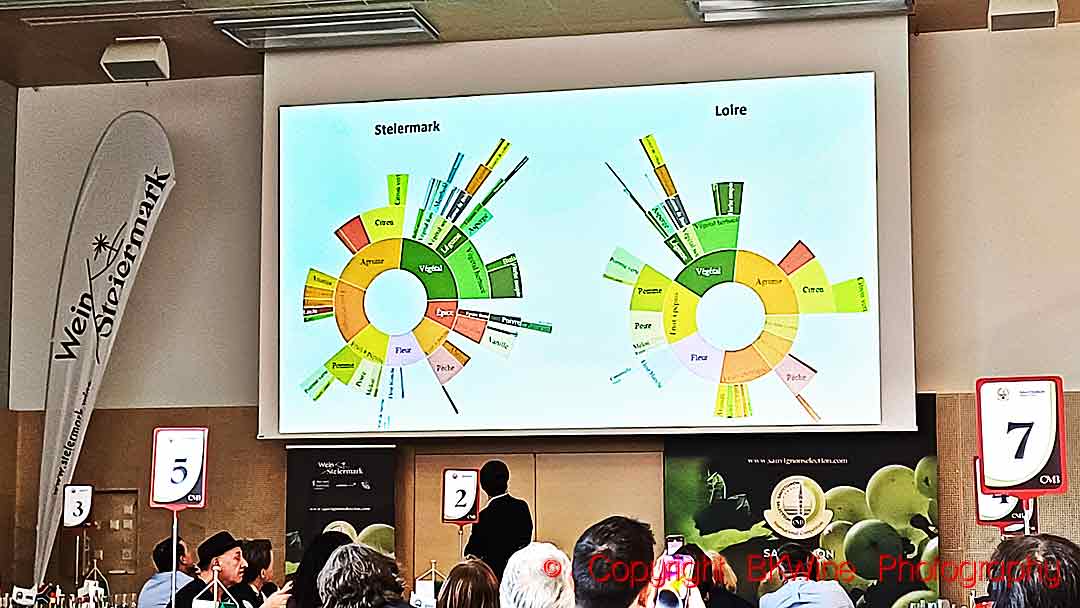
AI-generated charts based on human-written tasting notes comparing wine characteristics from the Loire and Steiermark

AI-generated charts based on human-written tasting notes comparing wine characteristics from the Loire and Steiermark, as used by the CMB Concours Mondial de Bruxelles

Succeed in Executive Interim Management with Anne Céline Martel and Jérôme Larue

Au programme du 10 juin, focus sur le Management de Transition Exécutif :

  • Anne Céline Martel, experte en transformation organisationnelle et management de transition au niveau direction générale, apportera son témoignage sur les défis et opportunités du management de transition exécutif.
  • Jérôme Larue, Directeur Associé chez Chaberton Partners, spécialisé dans le recrutement de managers de transition expérimentés, offrira son expertise sur les meilleures pratiques pour saisir des missions de haut niveau.

Notre événement du 10 juin proposa une interaction dynamique sous forme de questions-réponses dans un cadre convivial.


Speakers:

  • Anne-Celine Martel is an executive interim manager since 2012
  • Jérôme Larue, Associate Director at Chaberton Partners

Theme: Executive Interim Management

This lunch provided expert insights on:

  • The critical business cases and nuanced aspects of executive interim management.
  • Actionable strategies to successfully navigate critical business transitions.
  • Crafting compelling propositions and mastering the art of pitching for interim management

Speaker Biographies:

Anne-Céline Martel

With over two decades of experience as an interim Chief Transformation Officer and CEO/COO, Anne Celine specializes in driving significant organizational changes in diverse industries. Her expertise in navigating growth, decline, and market disruptions has propelled numerous SMEs and mid-cap companies to success.

Jérome Larue

As Associate Director at Chaberton Partners, Jérôme brings over 20 years of expertise in financial management and executive recruitment. Jérôme will offer insights into the executive interim management landscape and actionable strategies for securing high-profile executive interim assignments.

Organised by Lunch at the Circle.

Jérôme Larue and Anne Céline Martel, speakers on the theme of Interim Management at Lunch At The Circle

Jérôme Larue and Anne Céline Martel, speakers on the theme of Interim Management at Lunch At The Circle, copyright F Teboul

Anne Céline Martel, speaking about Interim Management at Lunch At The Circle

Anne Céline Martel, speaking about Interim Management at Lunch At The Circle, copyright F Teboul

Jérôme Larue, Directeur Associé at Chaberton Partners speaking about Interim Management at Lunch At The Circle

Jérôme Larue, Directeur Associé at Chaberton Partners speaking about Interim Management at Lunch At The Circle, copyright F Teboul

Per Karlsson introducing the speakers on Interim Management at Lunch At The Circle

Per Karlsson introducing the speakers on Interim Management at Lunch At The Circle, copyright F Teboul

Guests at the Lunch at the Circle debate meeting for an aperitif in the bar before lunch

Guests at the Lunch at the Circle debate meeting for an aperitif in the bar before lunch, copyright F Teboul

The desk where Alfred Nobel wrote and signed his testament establishing the Nobel Prize, now at the Swedish Club in Paris

The desk where Alfred Nobel wrote and signed his testament establishing the Nobel Prize, now at the Swedish Club in Paris, copyright F Teboul

Guests enjoying the Lunch at the Circle debate and lunch

Guests enjoying the Lunch at the Circle debate and lunch, copyright F Teboul

David Laurent, Entreprises pour l’Environnement, how to prepare companies for a sustainable future

Déjeuner-conférence L@C – Lunch at the Circle — avec David Laurent, parlant de la manière de préparer les petites et grandes entreprises à un avenir durable.

David Laurent est directeur de la transformation écologique au sein d’Entreprises pour l’Environnement (EpE). L’EpE est un groupe de réflexion ou association (think tank) créé pour aider les entreprises à faire face aux futurs défis climatiques et durables. Une liste impressionnante de grandes entreprises françaises sont membres de l’EpE. Voir la liste des membres ici :

https://www.epe-asso.org/liste-des-membres/

David parle des défis qu’ils relèvent et de leur approche spécifique pour aider les grandes entreprises (et petites) à développer des processus plus durables et à adapter leur modèle commercial aux exigences futures qui laisseront la Terre en bon état pour les générations futures.

Vous pouvez trouver plus d’informations sur les Entreprises pour l’Environnement ici :

https://www.epe-asso.org/


LUNCH AT THE CIRCLE, L@C, speaker lunch, with David Laurent, speaking on how to prepare small and large companies for a sustainable future.

A pre-lunch talk with the speaker.

David Laurent is head of Climate and Resources for Entreprises pour l’Environnement (EpE). The EpE is a think-tank created to help companies face future climate and sustainability challenges. An impressive list of major French companies are members of the EpE.

David talks about the challenges they are tackling and their specific approach to help large companies grow more sustainable processes and adapt their business model to future requirements that will leave Earth in good condition for future generations.

A short time-lapse of the beginning of the lunch:

David Laurent, Entreprises pour l'Environnemment, EpE, speaking at Lunch At The Circle

David Laurent, Entreprises pour l’Environnemment, EpE, speaking at Lunch At The Circle

David Laurent, Entreprises pour l'Environnemment, EpE, speaking at Lunch At The Circle

David Laurent, Entreprises pour l’Environnemment, EpE, speaking at Lunch At The Circle

Executive Interim Management – how to succeed in a challenging environment

Next L@C event, June 10: Executive Interim Management

Lunch at the Circle is inviting you to join us for a special summer lunch on 10th June from 12:00 pm to 2:00 pm. This lunch will feature two expert practitioners who will share real-world perspectives on Executive Interim Management:

Anne Céline Martel:

Anne-Celine Martel is an executive interim manager since 2012. She will share the challenges and rewards of interim management : why she moved from the comfort of a salaried position to interim management, how she managed that transition and what keeps her going. She will bring an insider’s view on how to find, win an assignment and make a success out of it.

Jérôme Larue:

Associate Director at Chaberton Partners, offers a comprehensive overview of the executive interim management landscape, drawing from over 20 years of expertise in financial management and executive recruitment. His pragmatic approach will explore how to respond to clients’ needs, effective self-presentation techniques, and securing high-profile assignments.

This lunch will provide expert insights on:
– The critical business cases and nuanced aspects of executive interim management.
– Actionable strategies to successfully navigate critical business transitions.
– Crafting compelling propositions and mastering the art of pitching for interim management

Details:

  • Date: Monday June 10
  • Time: You’re welcome from 12.00. We sit down at the table at 12.30. Ends at 14.00.
  • Place:
  • Speakers:
    • Anne-Céline Martel
    • Jérôme Larue

Book now

CONTACT ME IF YOU HAVE NOT RECEIVED YOUR INVITATION ON EMAIL.